
Institute of Philosophy, Political Science and Religious Studies Committee of Science of the Ministry of Science and Higher Education of the Republic of Kazakhstan · established 1958
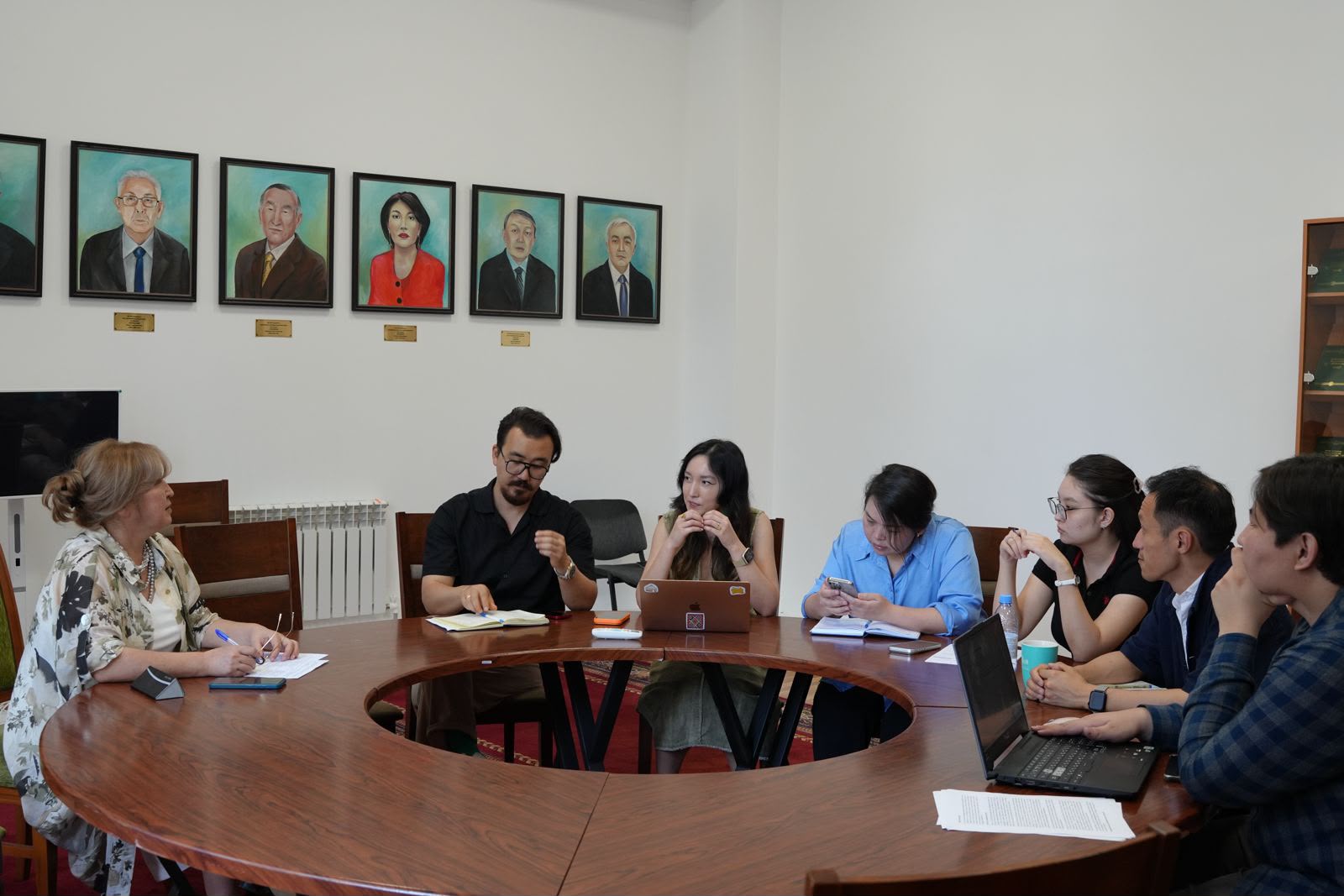
The project "Artificial Intelligence and the Ethics of Social Justice" explores new challenges at the intersection of technology, society, and ethics. The working meeting featured an exchange of views on research results, discussion of key findings, and identification of areas requiring further attention.
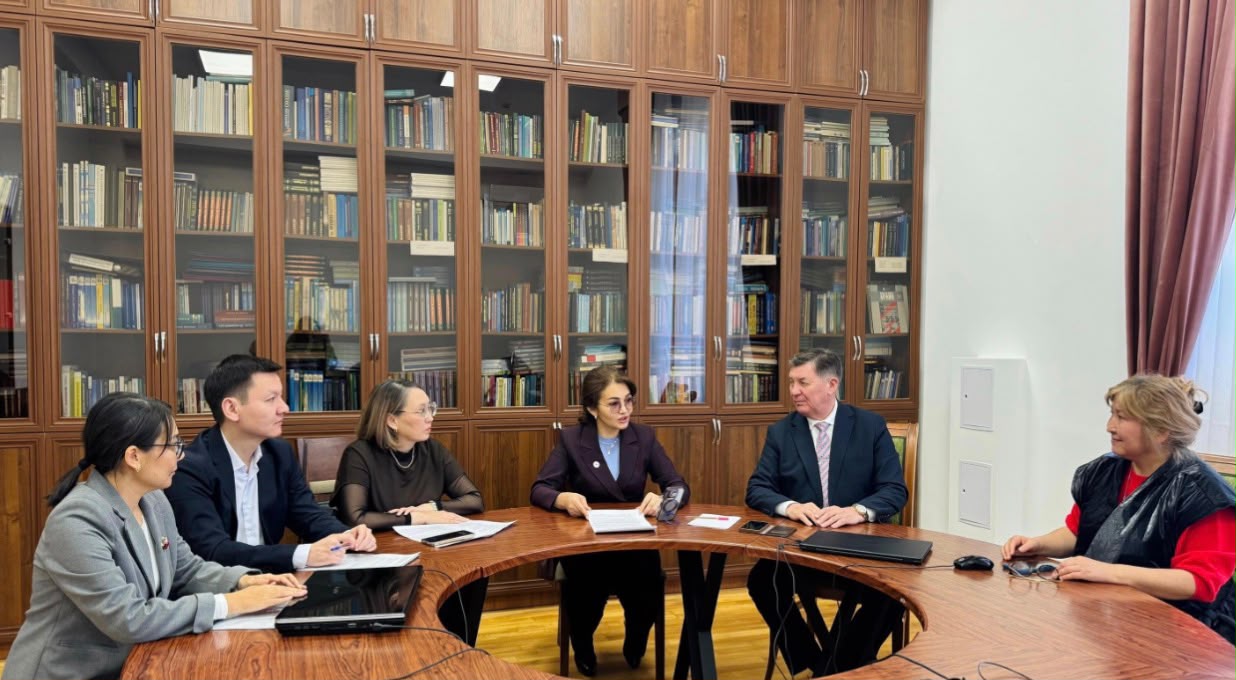
Project leader Sholpan Jamanbalayeva held a working meeting with representatives of the university research community. Issues of research organization, project implementation and interdisciplinary cooperation were discussed.
Participants discussed key research directions, current results, and organizational aspects of project implementation. Special attention was paid to the ethical dimensions of AI, its impact on social processes, and the need to incorporate principles of social justice in the development and deployment of digital technologies.
IPAR senior researcher Rustem Mustafin on Kazakhstan's strategic AI and digitalization priorities: ICT services volume grew 155% over 10 years, exports increased 5-fold. Kazakhstan ranked 24th in the UN e-government index, ahead of China and Germany.
Rustem Mustafin (IPAR) on Kazakhstan's IT prospects: over 16,000 IT companies, 180,000 specialists. IT services exports grew from $30M in 2020 to $500M+ in 2023. The $1B target by 2026 is realistic.
IPAR Center for Digital Social Sciences head Rustem Mustafin: establishing a Ministry of AI and Digital Development reflects Kazakhstan's ambition to become an active player in the global digital race. Digital sovereignty is a pillar of state resilience.
Ermek Toktarov (IPAR) on three strategic directions: accelerated AI integration in state agencies and smart cities, enhanced cybersecurity, and the AI-Sana program for developing highly qualified AI specialists.
Ermek Toktarov (IPAR): Successful AI integration is an investment in the future. AI can help harmonize the legal system, improve educational accessibility, and enhance the competitiveness of Kazakhstani specialists in the global market.
President Kassym-Jomart Tokayev's Address places significant emphasis on human capital. The Head of State's words reflect a strategic approach to digital modernization, which is impossible without systemic changes in education. "Competencies in artificial intelligence must begin developing from school," the President stressed.
President K.K. Tokayev, speaking at the expanded Government session, emphasized the need for accelerated adoption of AI technologies, with particular focus on e-government systems and Smart City projects. Successful implementation requires accounting for the population's digital literacy, attitudes toward AI, and the specific ways different social groups use digital services.
Kazakhstan's President K.K. Tokayev, speaking at the expanded Government session, emphasized the need for accelerated use of AI technologies with particular attention to e-government and Smart City projects. Successful implementation is impossible without accounting for digital literacy levels, AI perception patterns, and how various social groups use digital services.
To provide a conceptual understanding of the potential and ethical risks of applying artificial intelligence (AI) in the context of social justice in Kazakhstan, and to identify its role in the processes of modernization and transformation of society.
In the contemporary world, artificial intelligence (AI) is rapidly penetrating all spheres of life, opening unprecedented prospects for humanity. However, alongside the enormous potential of AI, serious ethical questions arise that require thorough consideration. In the context of modernization and transformation of Kazakhstani society, the issue of social justice in the digital age is becoming particularly relevant.
The program is aimed at studying the ambivalent potential of AI and developing ethical principles for its application in the context of social justice in Kazakhstan. The program will include a comprehensive study of the dynamics of social change, the value orientations of different social groups, ethical and legal aspects of AI use, and international experience in this field.
The results will enable the development of recommendations to minimize risks and ensure social justice under conditions of digitalization, contributing to the development of a harmonious and just society in Kazakhstan.
The scientific novelty and significance of the program are based on a comprehensive and interdisciplinary approach to studying a broad range of issues related to the application of artificial intelligence (AI) technologies in Kazakhstan’s current process of social modernization; the specific structure and content of the phenomenon of social justice in the country; the value orientations of different social groups in the context of the transformation of social relations under the influence of digital technologies; and the potential of AI to promote social justice by reducing digital inequality and ensuring equal access to technological resources.
Compared with international research, the body of work produced by Kazakhstani scholars in this field remains relatively limited. This indicates a lack of theoretical knowledge on the topic in Kazakhstan. The program not only synthesizes existing international approaches to state and institutional regulation of AI, but also proposes adapted models of such mechanisms, thereby providing the research with practical value.
A distinctive feature of the project is its interdisciplinary and comprehensive examination not only of relations between state institutions and AI, but also of interaction between society and information technologies. The program corresponds to national development priorities and will contribute to addressing key challenges of Kazakhstan’s socio-economic and scientific-technological progress.
To formulate scientifically grounded recommendations for public policy in the field of AI regulation, taking into account the principles of social justice and Kazakhstani values. Ethical aspects of AI application require particular attention in order to minimize potential negative consequences.
The European Union is developing the “AI Act”, legislation establishing transparency standards, preventing discrimination, and protecting citizens’ rights in the digital age. Kazakhstan may adapt this experience by developing its own regulatory documents that take into account the country’s cultural and social characteristics. Such measures would help reduce risks associated with AI use, including breaches of data confidentiality, increased social polarization, and algorithmic bias.
The main research hypotheses assume that the development of AI can simultaneously accelerate processes of social modernization and intensify social inequality due to the digital divide. A comprehensive approach is applied to test these hypotheses, combining theoretical research, empirical data analysis, virtual experiments, and predictive modeling.
The empirical base is formed through quantitative surveys of different social groups, expert interviews with professionals in digital technologies, education, and governance, as well as focus groups. Regression and correlation analysis, clustering, and transcript coding methods are used for data processing.
The processing tools include SPSS, R, and Python, as well as the Digital Platform for Analysis and Management of Sociological Data of the Institute of Philosophy, Political Science and Religious Studies (Author’s Certificate No. 52333 dated December 9, 2024). Based on this platform, a technology called “digital consultant using artificial intelligence for social research” will be developed.
All publications, reports, and research results are openly available in the “Results” section. DOI links are provided for each article. When collective monographs, articles, methodological recommendations, and manuals are published, the specific contribution of each project participant is indicated on a mandatory basis.
Within the scientific program, a system for applying AI to scientific tasks in the field of social data analysis will be developed. A patent will be obtained to protect intellectual property.
Research group of the Institute of Philosophy, Political Science and Religious Studies.

Possesses a high level of theoretical training and extensive research, scientific-organizational, and practical experience in interdisciplinary social research. Author of more than 150 scholarly works directly related to digitalization, social modernization, digital inequality, social structure transformation, and social justice.
Holds certificates of authorship for the development of a digital platform for interactive analysis and management of sociological data, and for research on state policy in the field of digitalization. Publications in identity and subjective well-being demonstrate competencies essential for developing ethical AI systems in Kazakhstani conditions.
Publications, intellectual property certificates, and progress in project implementation
Сагикызы А., Дунаев В.Ю., Курганская В.Д. Информационное общество: концептуальные модели и алгоритмы фреймирования опыта повседневности // Вопросы философии. 2026. № 1. С. 28–38.
DOI: 10.21146/0042-8744-2026-1-28-38 →Шаукенова З.К. Акторно-сетевая парадигма социологии «незапрошенного общественного мнения» // Қоғам және Дәуір. – 2026. – № 1S (89S). – С. 46–59.
DOI: 10.52536/2788-5860.2026.89.S1.004 →Садвокасов А.К., Джаманбалаева Ш.Е., Аманжолова А.Т. Қазақстанда жасанды интеллектіні игерудегі әлеуметтік айырмашылықтар: дайындықтан қолдануға дейін // Қоғам және Дәуір. – 2026. – № 1S (89S). – С. 9–20.
DOI: 10.52536/2788-5860.2026.89.S1.001 →Jamanbalayeva Sh.O., Burova E.M. Perception of Digital Technologies by Believers: Ambivalence of Practices and Dimensions in the Context of Social Justice // SOCIOLOGY. KZ. – 2025. – № 1(1). – P. 59–78.
DOI: 10.48010/2026.1/sskz.3 →Author's Certificates, зарегистрированные в Национальном Институте интеллектуальной собственности Республики Казахстан.
📄 Certificate: Computational Model →Участие в международных конференциях и научных мероприятиях по тематике проекта. Подробная информация будет добавлена по мере реализации.
Monographs находятся в процессе подготовки. Информация будет опубликована после выхода.